How Dagoretti’s Children Are Shaping the Future of Animal Welfare
On a chilly Saturday morning in Mutuini, Dagoretti South Constituency, children stole the show at a community rabies vaccination drive. Young caregivers turned out in large numbers with their cats and dogs, reflecting a growing awareness of animal welfare and rabies prevention.
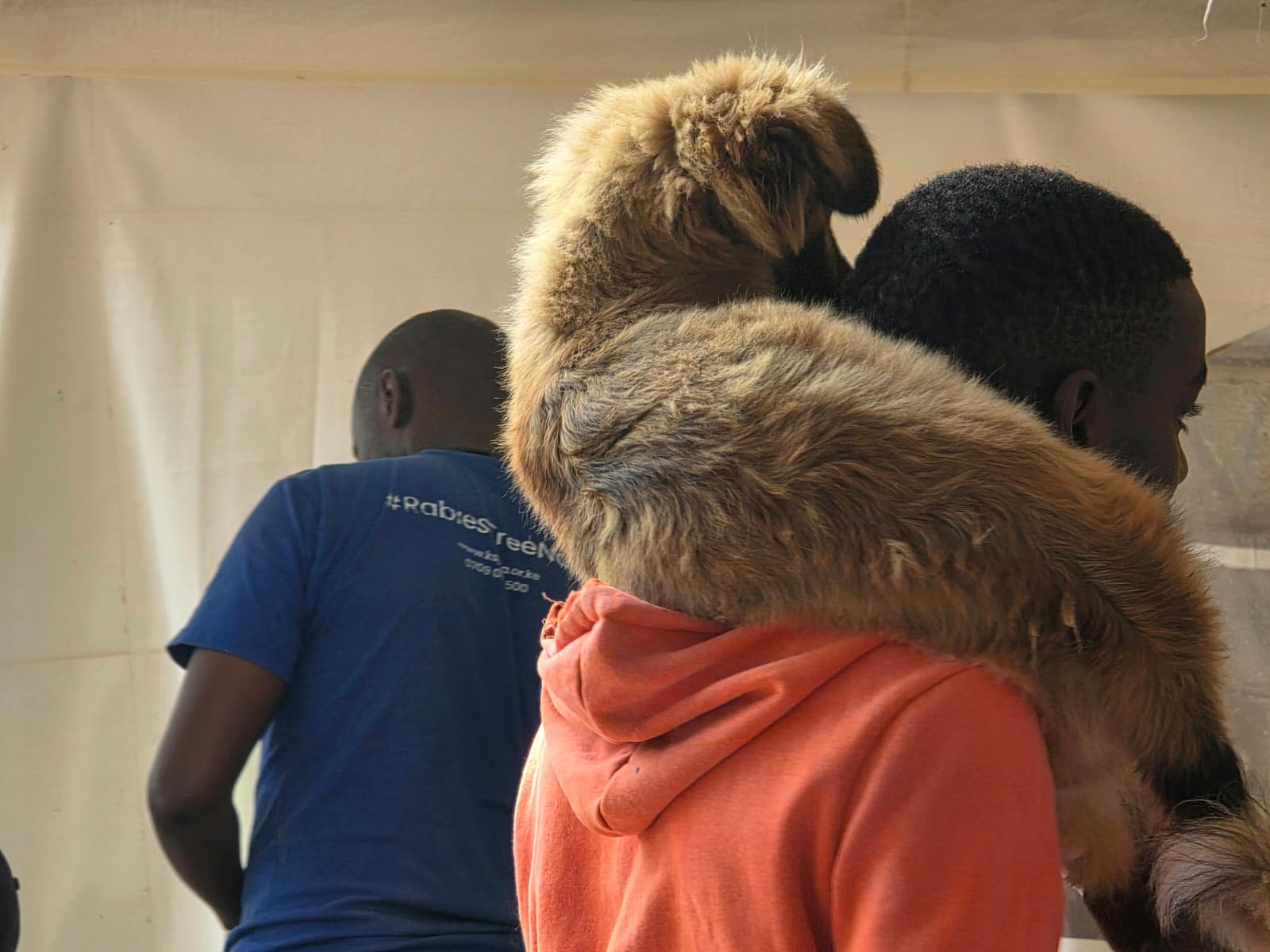
Trust on display: a puppy rides comfortably on its young handler’s shoulders while waiting for vaccination.
School bags became pet carriers, while dogs walked proudly beside their handlers. Some children made repeated trips, returning with friends, neighbours, and more animals determined to ensure every pet received its shot.
With support from KSPCA and Nairobi City County, the drive attracted a diverse mix of pets—from tiny kittens and older cats to local and purebred dogs. Children registered confidently, queued patiently, and carefully watched over their animals throughout the process.
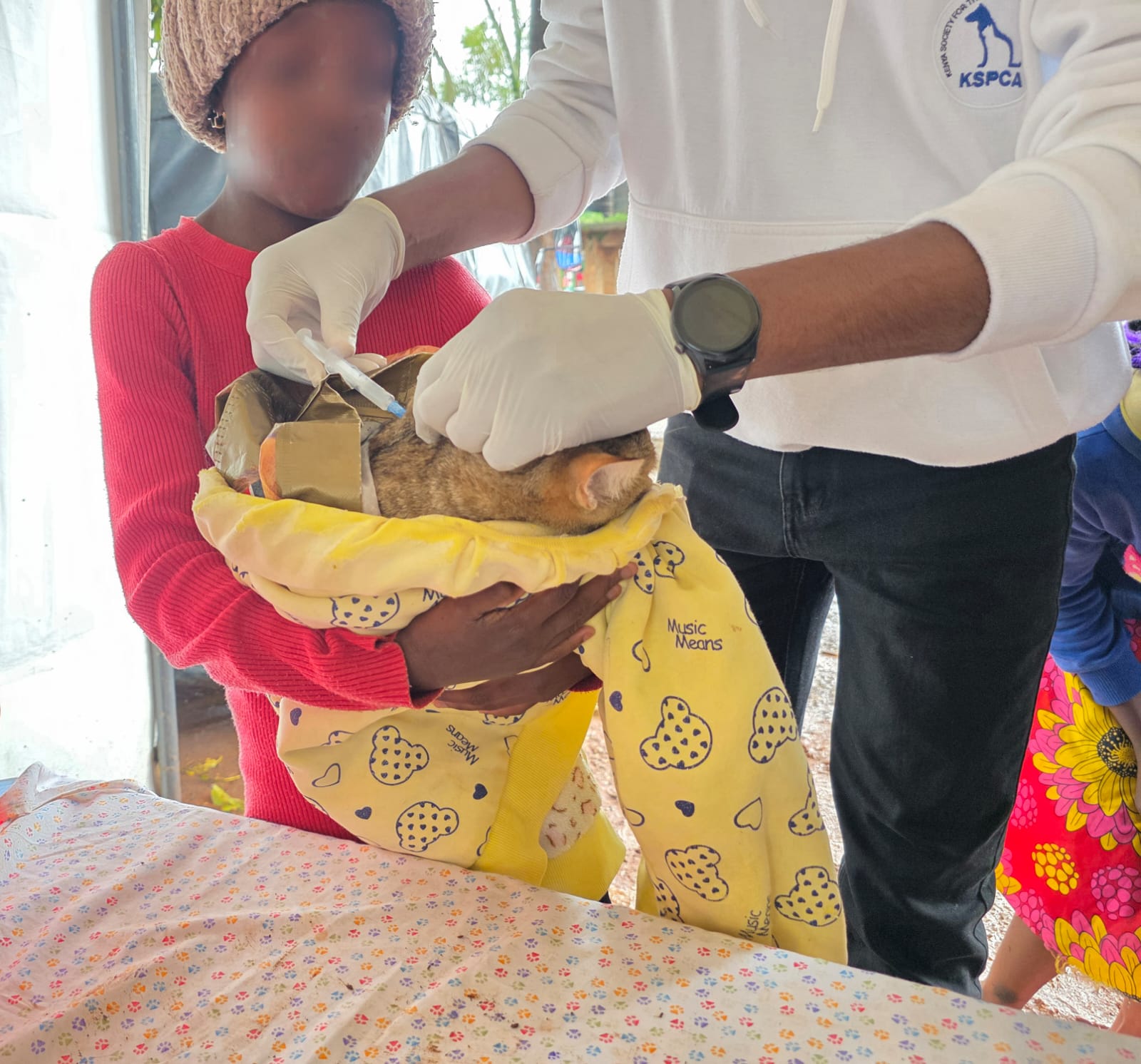
Wrapped like a baby and held with care, this cat receives its rabies shot under the watchful eyes of its young owner.
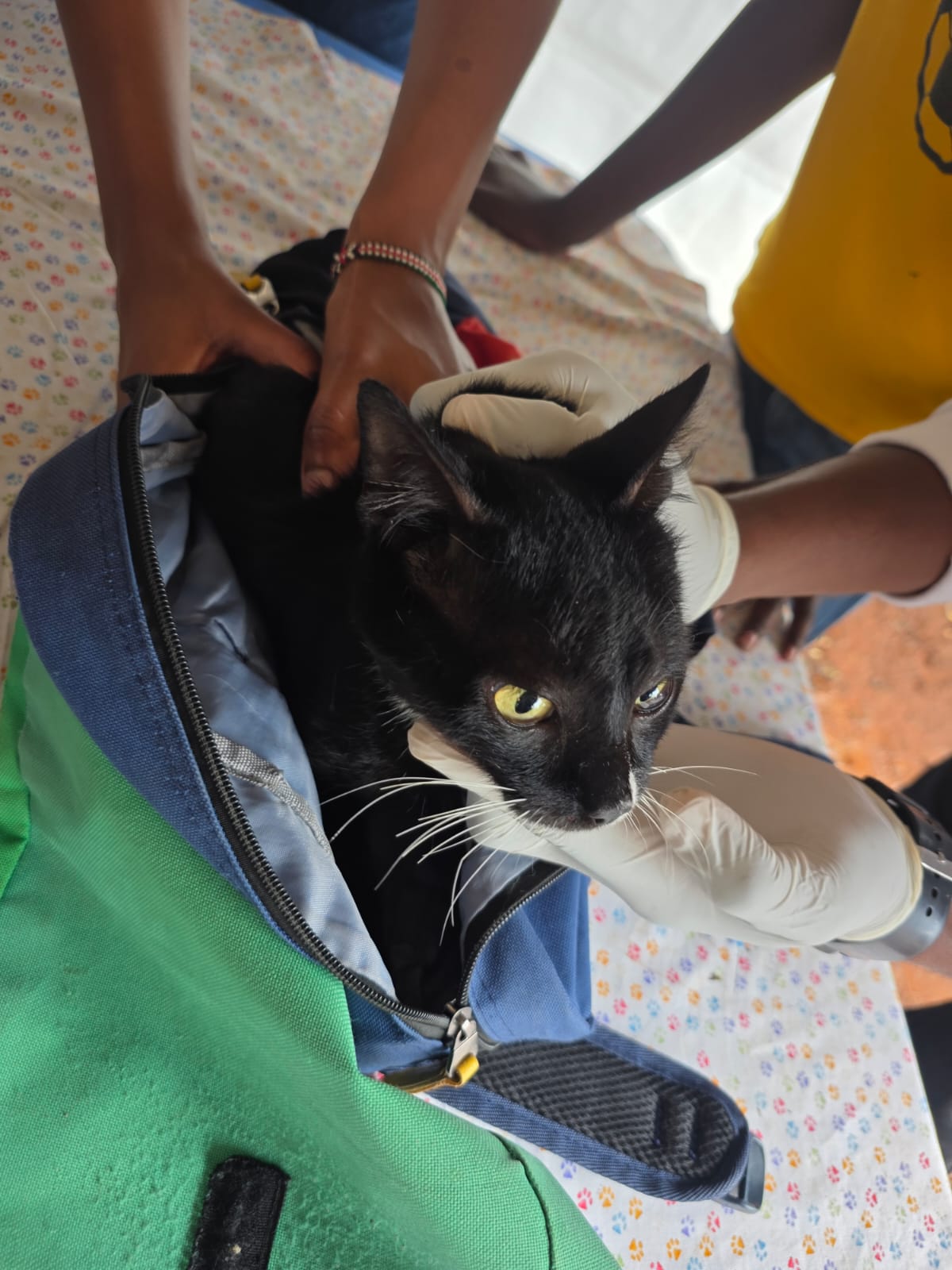
One of the most memorable sights was seeing cats tucked safely inside school bags—not books, but beloved pets. Others were wrapped in towels and cradled against chests like infants. Dogs walked calmly beside their young handlers, seemingly trusting them completely.
“Seeing children take such an active role is very encouraging,” said Dr Desmond Tutu, a veterinarian at KSPCA. “It builds a culture of responsibility and compassion that benefits both animals and the wider community.”
By the end of the two-day drive, more than 1,000 animals—including cats, dogs, and donkeys—had been vaccinated.
In a country where rabies continues to claim an estimated 2,000 human lives annually, such community action is not just significant—it is essential.
Lessons from Dagoretti
As I interacted with families and watched children caring for their pets, several lessons stood out.
1. Compassion Starts Early
Children have a natural capacity for empathy. The gentle way they handled their pets, patiently waited in line, and ensured they received vaccinations demonstrated that kindness can be nurtured from an early age.
Not books, but a beloved pet. A cat emerges from a school bag moments before receiving its rabies vaccination.
2. Responsibility Can Be Taught
Many of the children had been entrusted by their parents with the responsibility of bringing pets for vaccination and returning them home safely. These seemingly small tasks build confidence, accountability, and practical life skills.
3. Trust Is Earned Through Everyday Care
Perhaps the most powerful lesson came from the animals themselves. Despite the noise, crowds, and unfamiliar environment, many cats and dogs remained calm in the arms of their young handlers. Their behaviour reflected something deeper—a bond built through daily feeding, protection, affection, and care. Animals may not speak, but they communicate trust in countless ways.
4. Children Are Powerful Advocates
Some children did more than bring their own pets. They returned with friends and neighbours, encouraging others to participate in the vaccination exercise. Their actions demonstrated that children are not merely beneficiaries of animal welfare programmes; they can be active advocates and mobilisers within their communities.
5. Parents Play a Vital Role
Behind every confident young caregiver was a parent or guardian who had encouraged responsibility and trusted a child to care for an animal. Compassion is often reinforced at home. When families involve children in caring for pets, they help cultivate empathy, respect, and a sense of stewardship that can last a lifetime.
More Than a Vaccination Drive
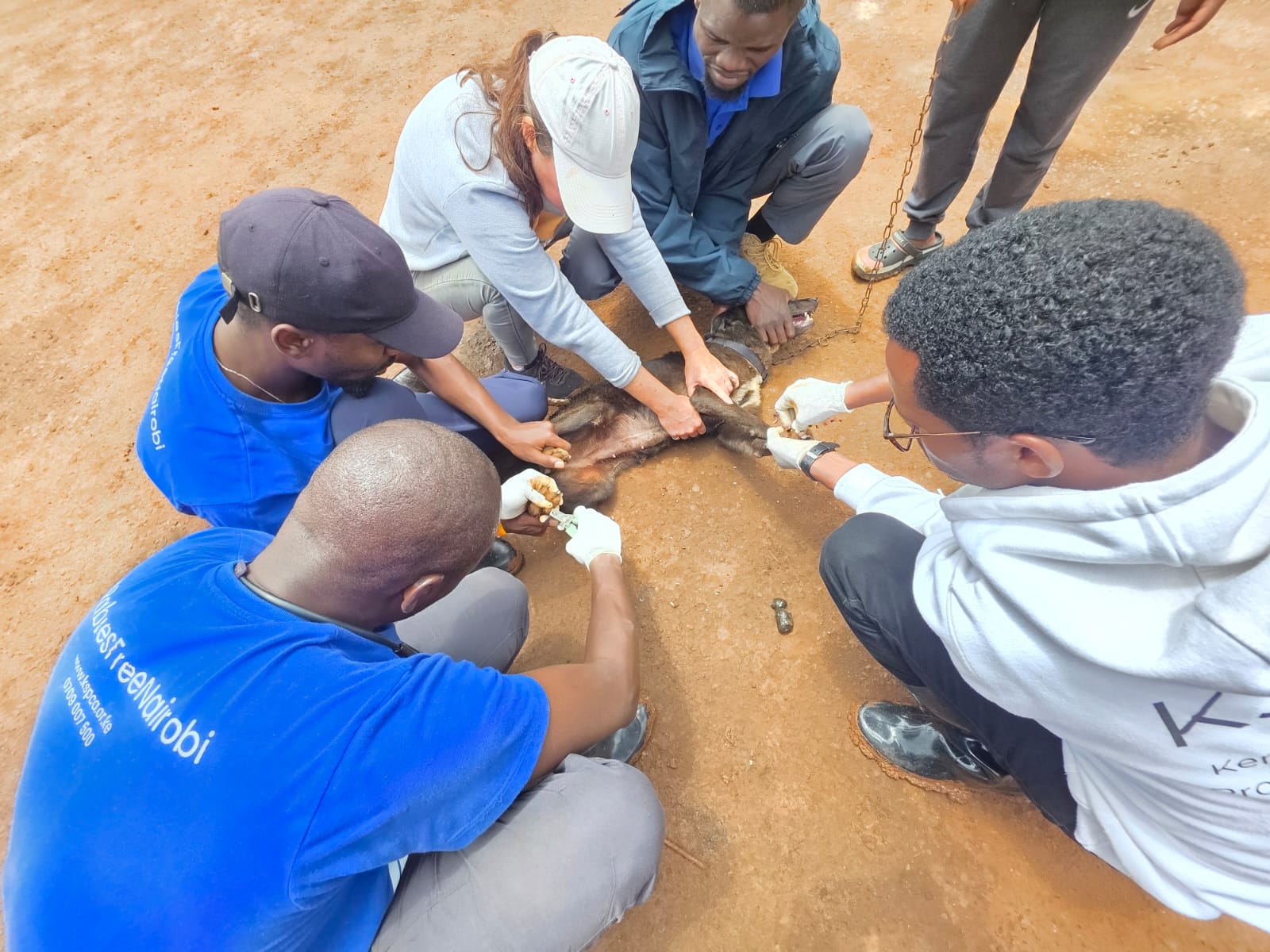
KSPCA team members assist a dog with painfully overgrown nails, demonstrating that animal welfare goes beyond vaccination.
The drive went beyond vaccination. One dog struggled to walk because of severely overgrown nails. The KSPCA team quickly trimmed them, restoring the dog’s comfort and mobility—a simple intervention that highlighted the importance of everyday animal care.
Dagoretti showed what is possible when young people are trusted with responsibility. Change does not always require complex solutions. Often, it begins with simple acts of care.
As the world searches for solutions to animal welfare challenges, perhaps we should pay closer attention to what is already happening in our communities—and give young caregivers a seat at the table.